Albertsons Companies - Personalization | product design lead
Project Overview
Albertsons operates one of the largest grocery e-commerce platforms in the US. In 2023, personalization was fragmented, opportunistic, and unmeasured — individual features existed, but there was no unifying strategy, no shared language across teams, and no framework for prioritization.
I came in as design lead to change that. Over the following year, I built the end-to-end vision for personalization across the entire shopping funnel — from marketing communications to post-purchase — then led the cross-functional alignment that turned that vision into a shipping roadmap. By end of 2024, the platform had grown from 2 personalization features to 15, contributing 50% above incremental revenue goal and an increase in MAU on personalized surfaces.
This is a case study in design strategy at an enterprise scale: how to create organizational alignment, build a durable framework, and then ship against it.
Core personalization team
2 Designers
4 Product Managers
Cross-functional teams
Data science and Engineering
Marketing and Creative
Front to back e-commerce funnel Product and Design
Design systems
Senior leadership
Impact (FY2024)
1% annual incremental revenue Y-o-Y
Surpassed revenue growth goal by 50%
Increased share of cart by 1%
Increased MAU by 100+K in personalized features engagement
+7% Personalization usage rate
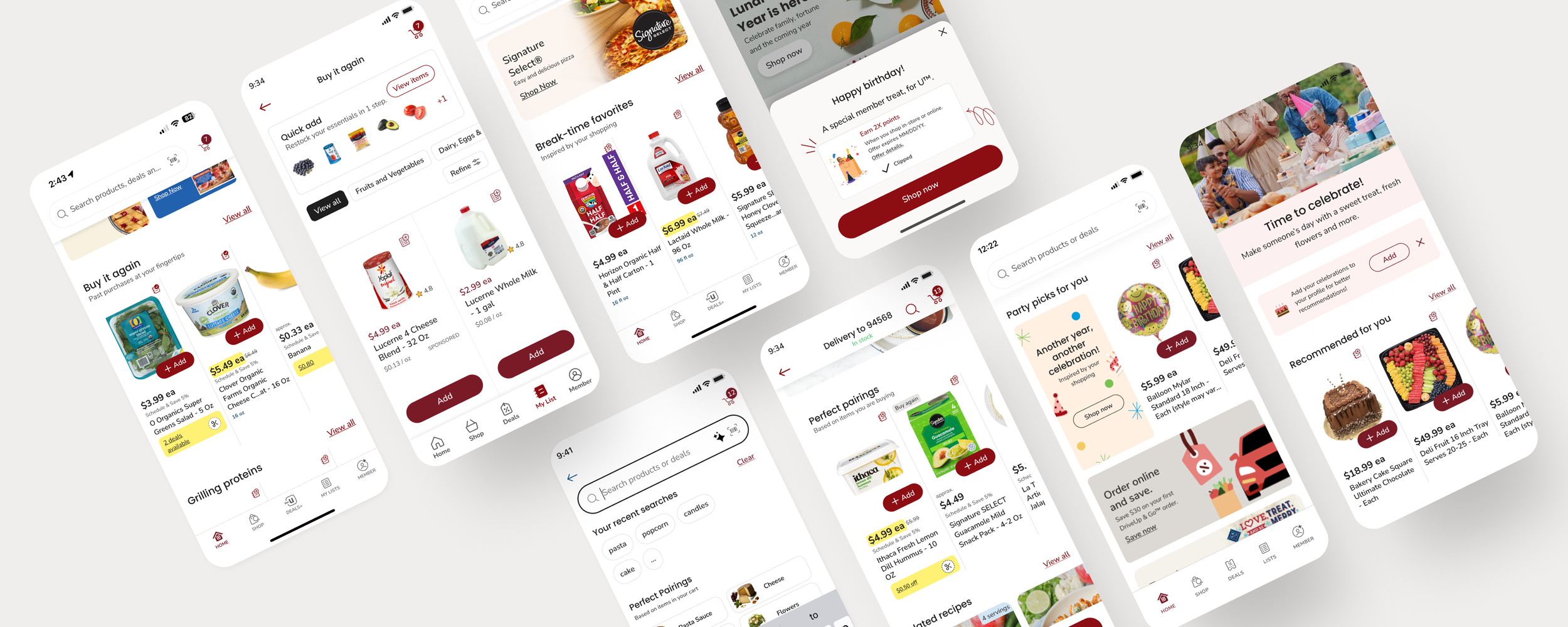
Launched and in-flight personalization features (2023-2025): Buy it again recommendations, Quick add cart, Personalized themes, Pre-churn messaging, Perfect pairings recommendations, Personalized events-based recommendations, personalization attribute capture.
CUSTOMER PROBLEM
Today, grocery shopping at Albertsons Co. is mostly a repetitive, transactional, and manual chore that is often a time-consuming, frustrating experience for customers who face challenges such as misremembering what they need, difficulty finding products quickly, and feeling overwhelmed by product options. This leads to increased stress, impulse purchases, and reduced overall satisfaction. Customers crave a more personalized experience that simplifies their shopping trip, aligns with their preferences, dietary needs, and household routines, and helps them navigate the store efficiently.
OPPORTUNITY FOR PERSONALIZATION
How might we create a grocery shopping experience that feels effortless, emotionally engaging, and deeply personalized—so customers feel truly valued, and naturally choose to spend more and return often? By leveraging personalized recommendations, tailored shopping lists, and in-store guidance, we can transform the manual shopping journey into a seamless, intuitive experience that saves time, minimizes cognitive load, and enhances customer satisfaction.
Discovery
UNDERSTANDING THE LANDSCAPE
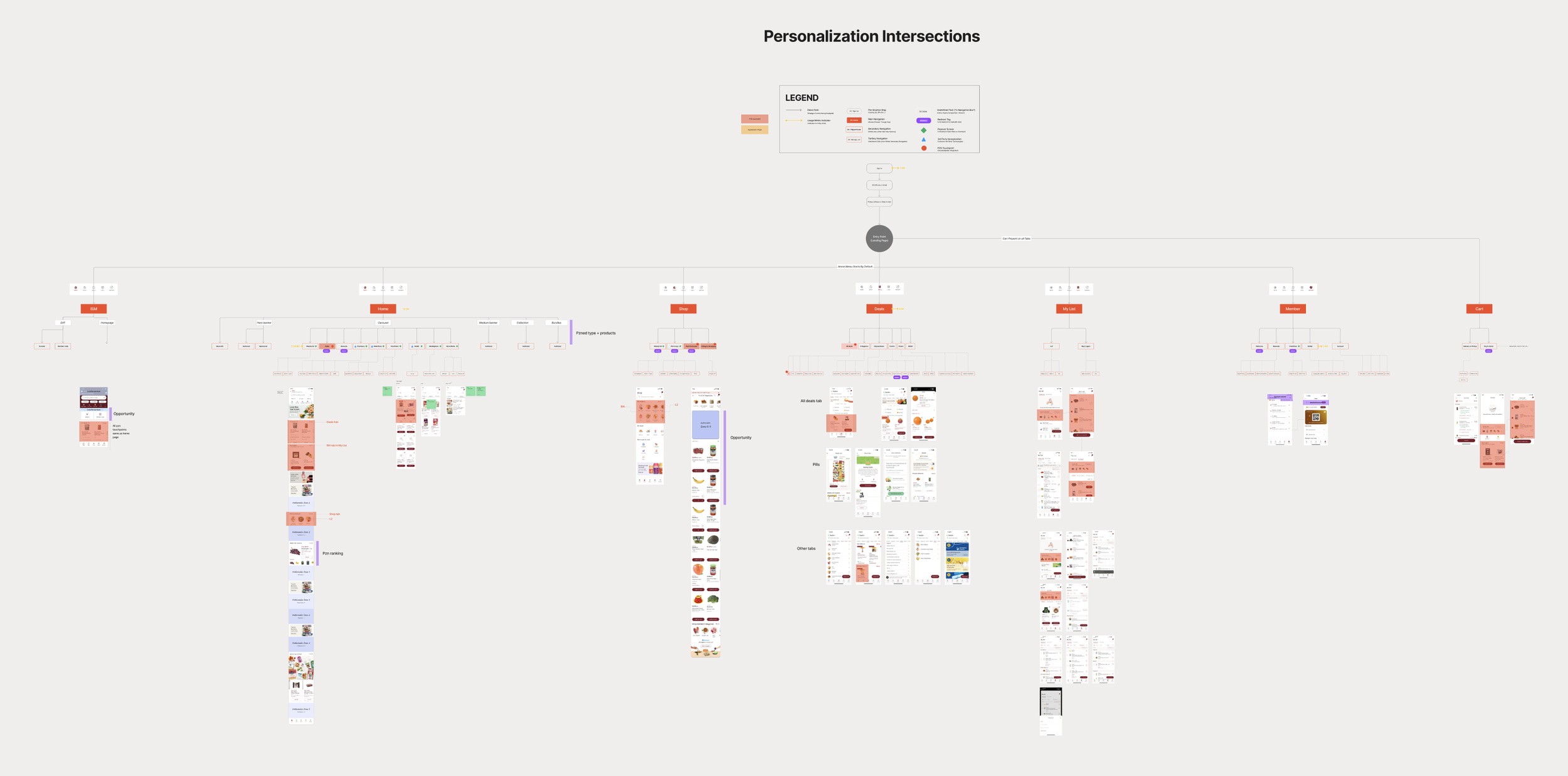
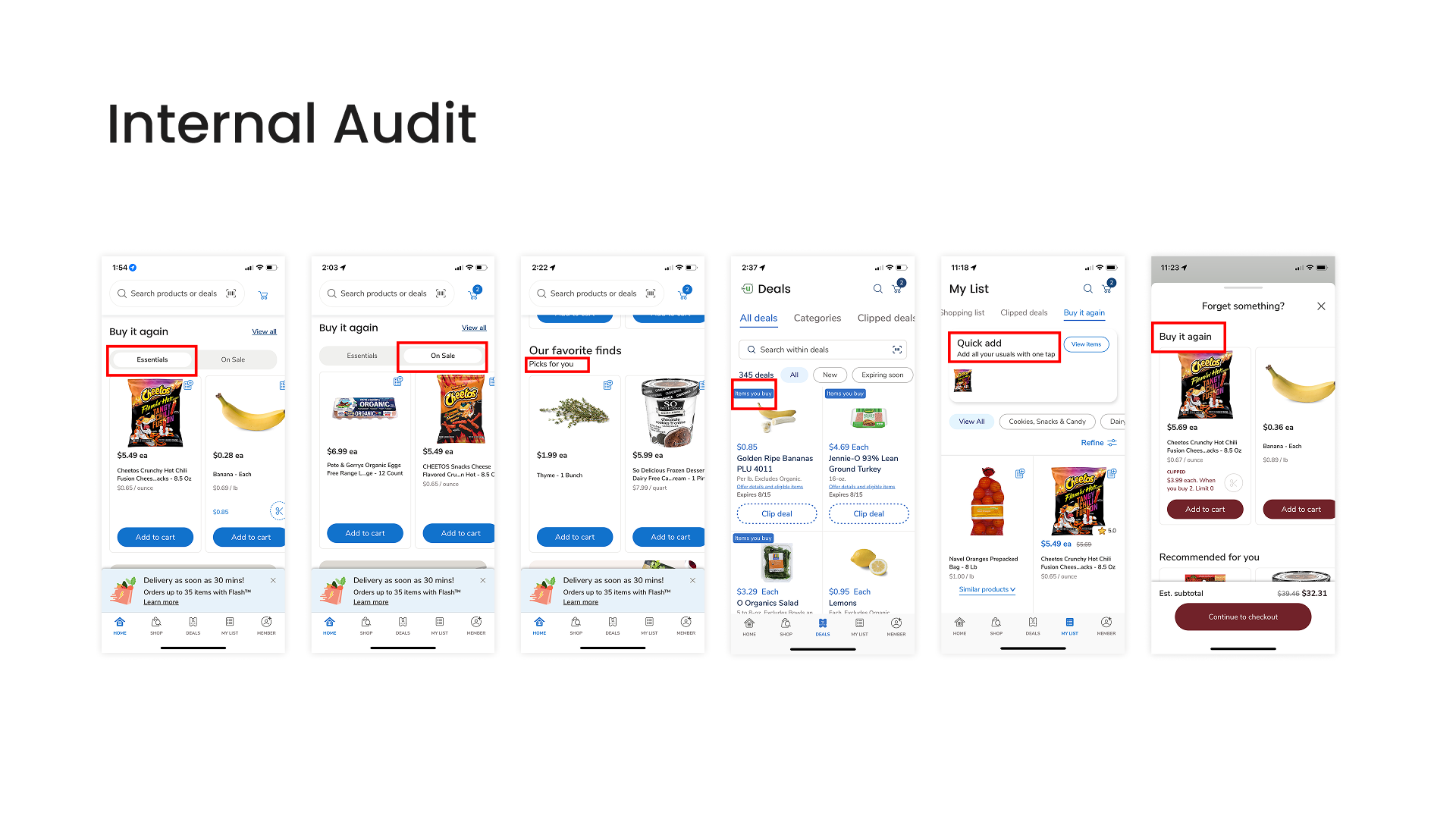
Before defining a vision, I needed to understand where we actually stood. That started with an internal audit of every personalization touchpoint across our digital platform — getting a clear picture of what existed, what was working, and where the gaps were.
I paired that with a competitive scan of the grocery landscape. The finding was encouraging: most competitors had little to no personalization presence, which meant there was a real opportunity to get ahead of the curve rather than play catch-up. For a retailer like Albertsons, that translated directly to business impact — more sales, deeper product discovery, and stronger category engagement in the short term, and increased customer loyalty and trust over time.
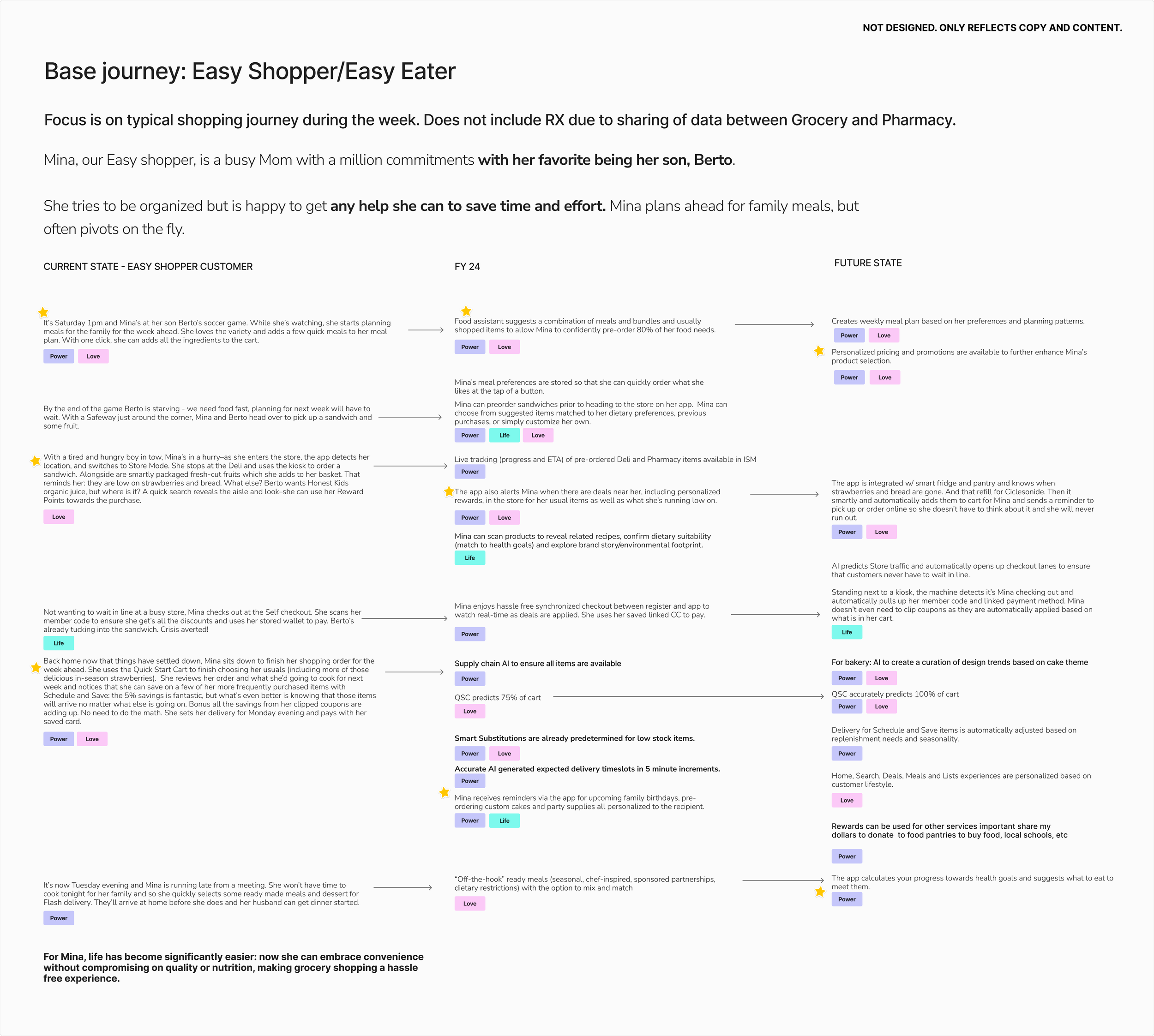
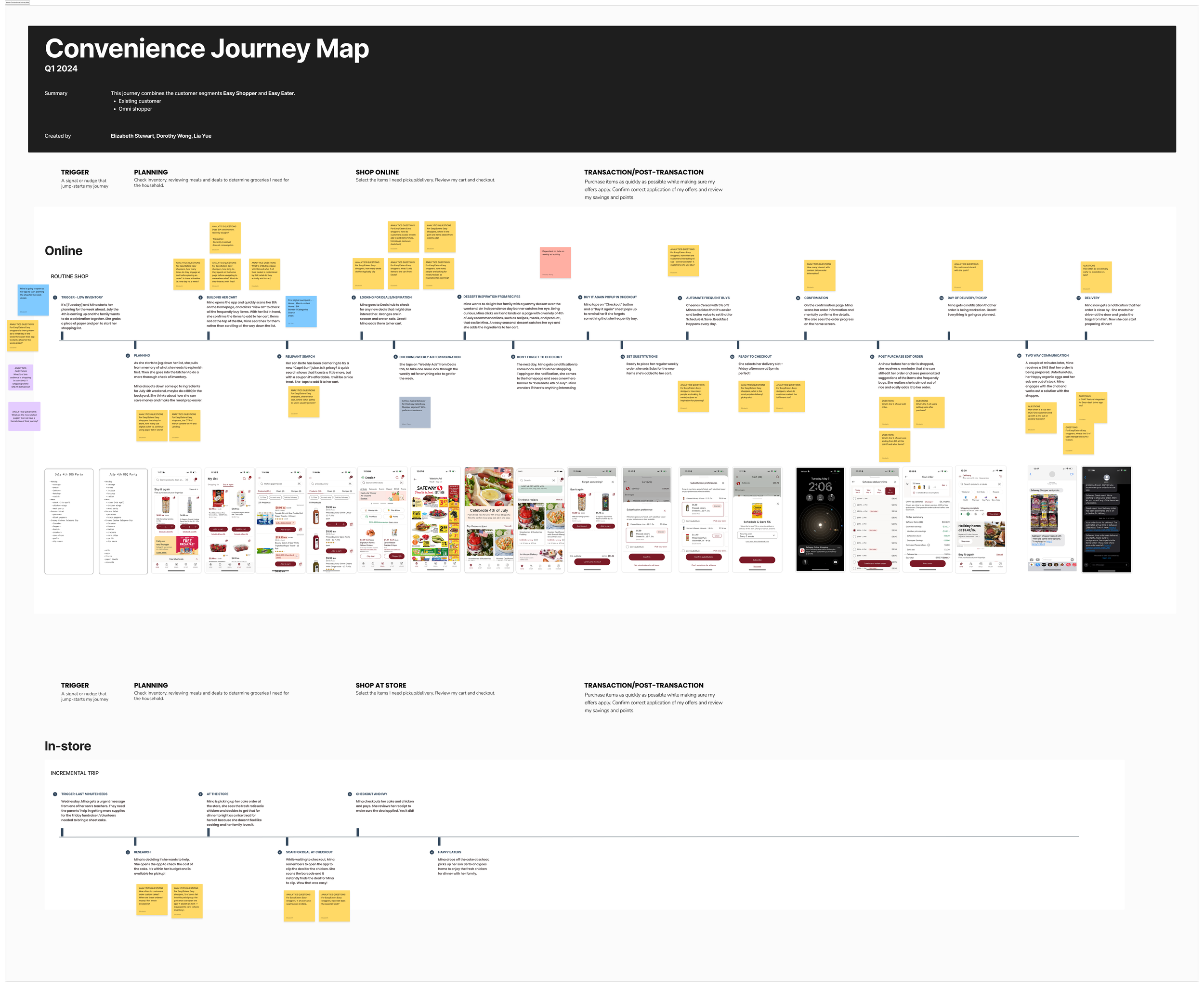
The other critical layer was building empathy. Using existing UX research, I mapped the end-to-end customer journey to understand the highs and lows of the shopping experience and where personalization could add the most meaningful value. Those gaps became the foundation for the vision work that followed — and the business case for investing in it.
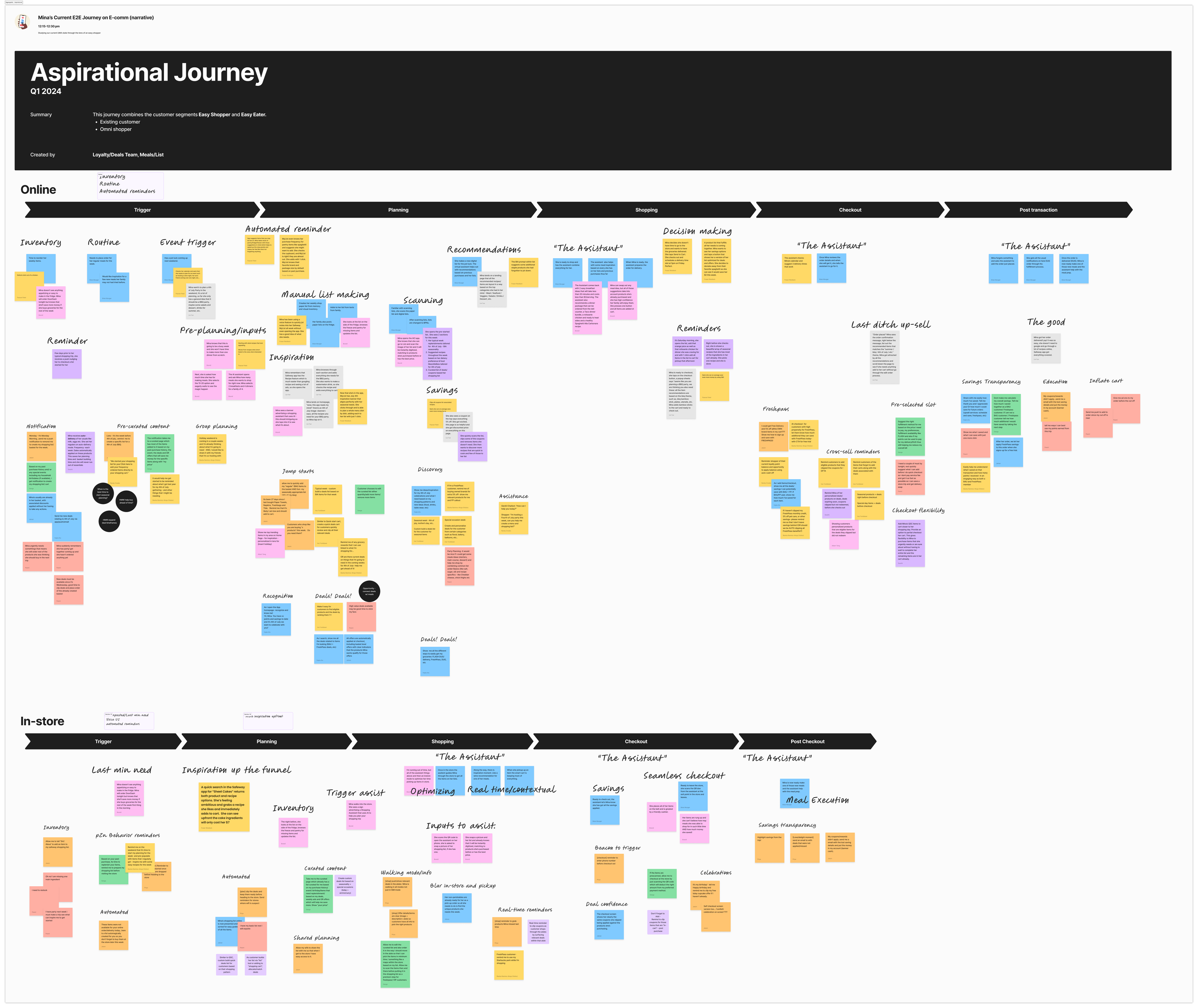
alignment through storytelling
One of the earliest challenges was getting five cross-functional teams — each with their own roadmap, metrics, and interpretation of what "personalized" even means — to rally around a shared direction. A strategy deck alone wasn't going to get us there.
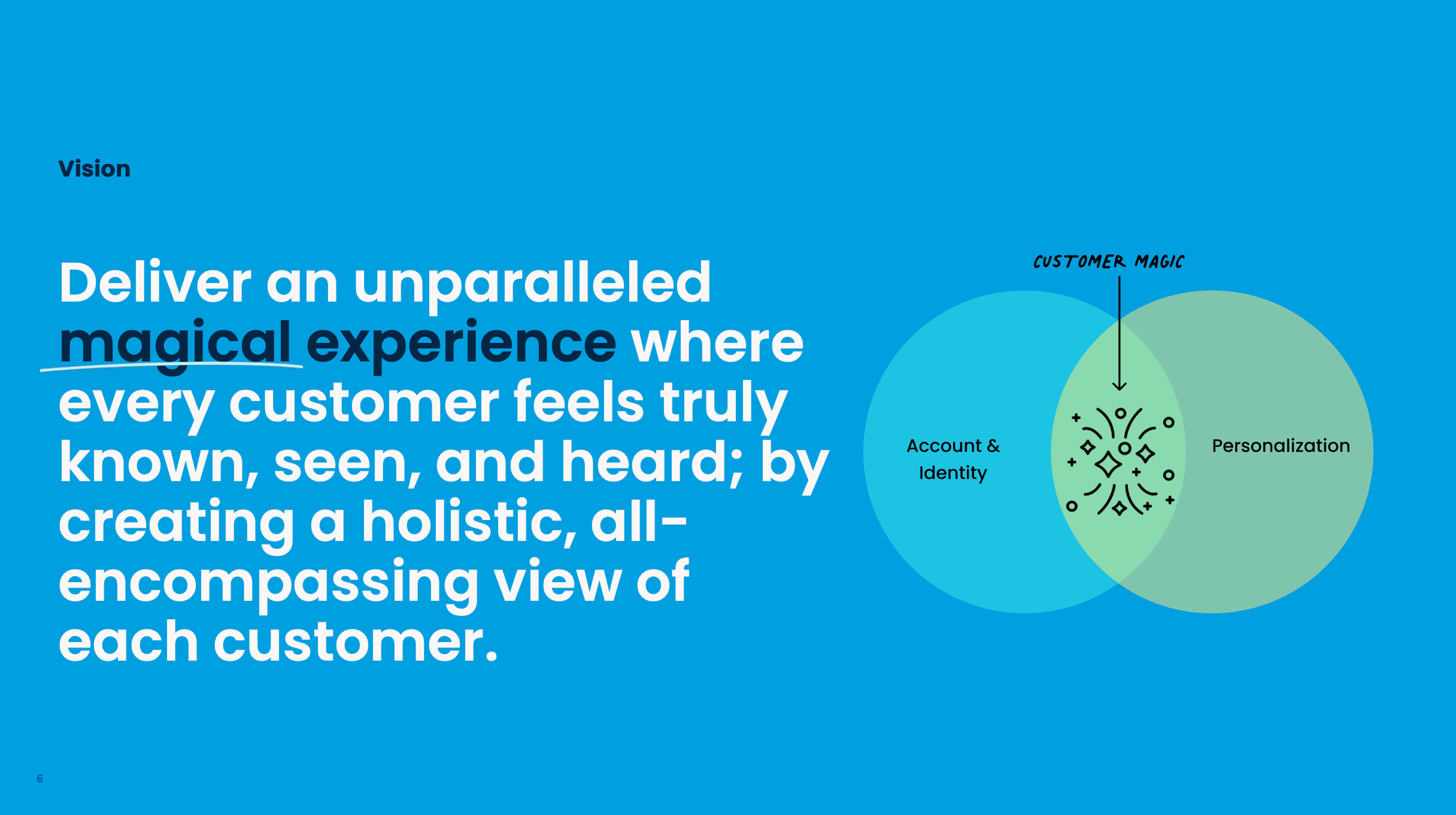
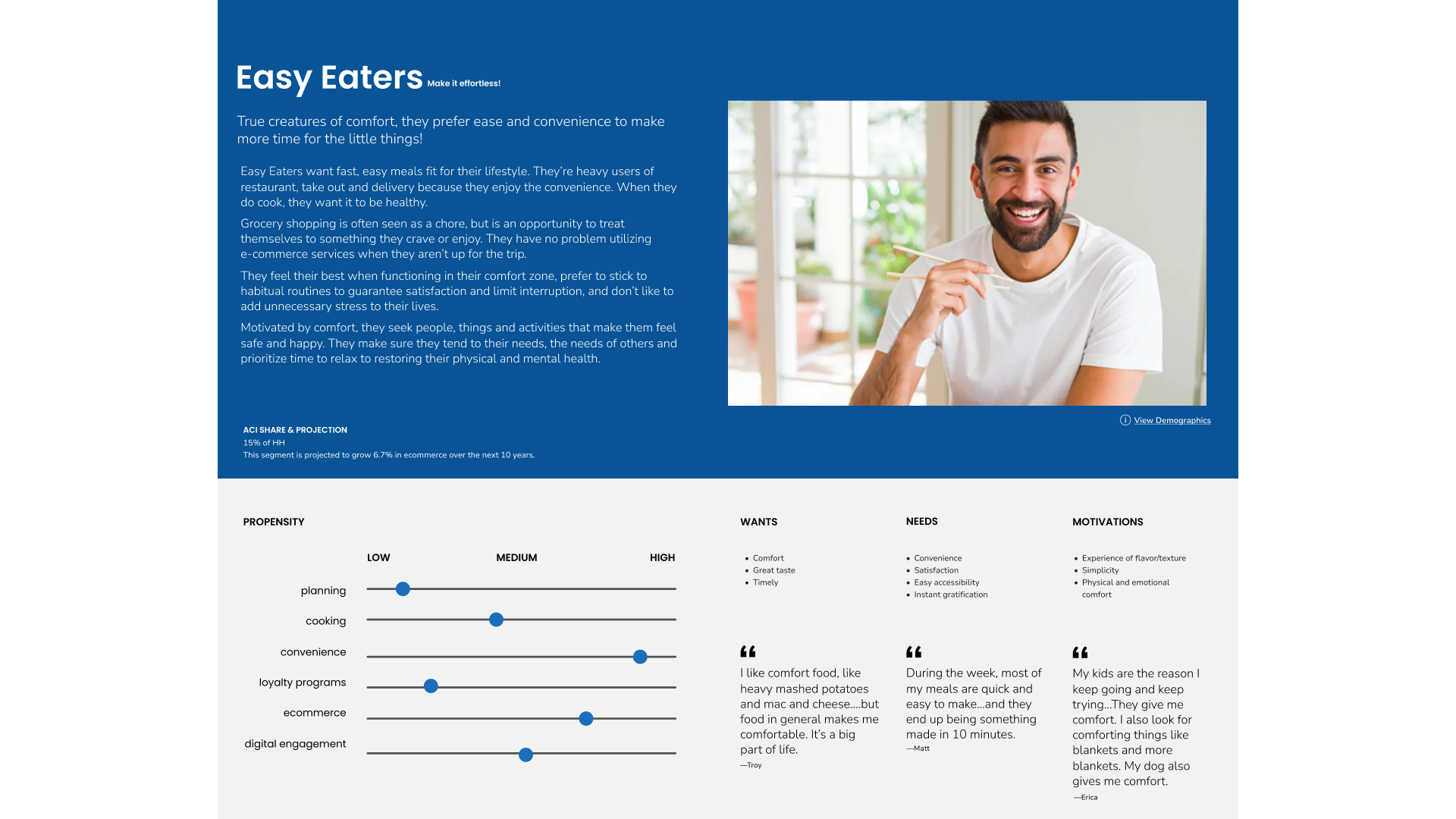
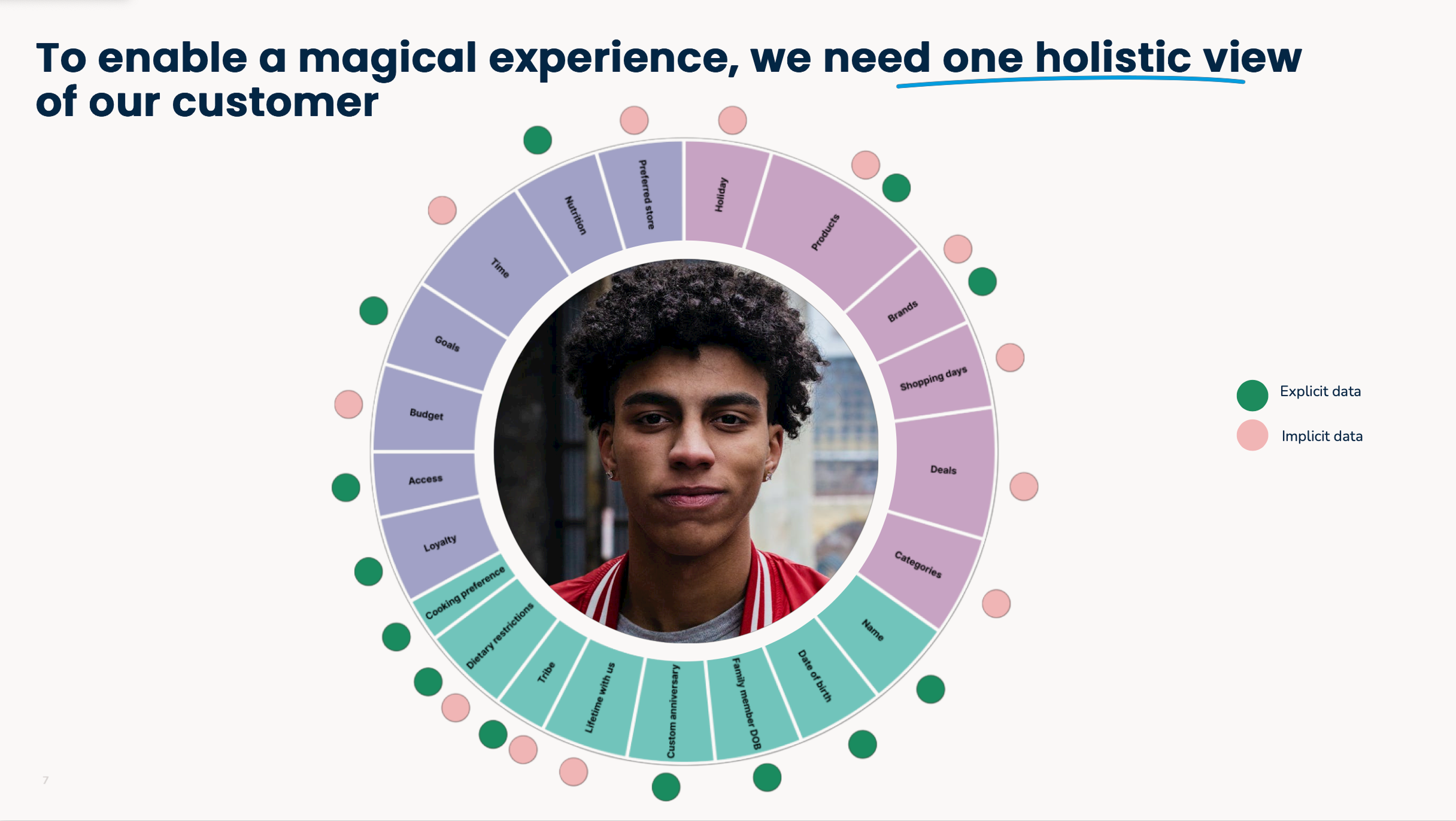
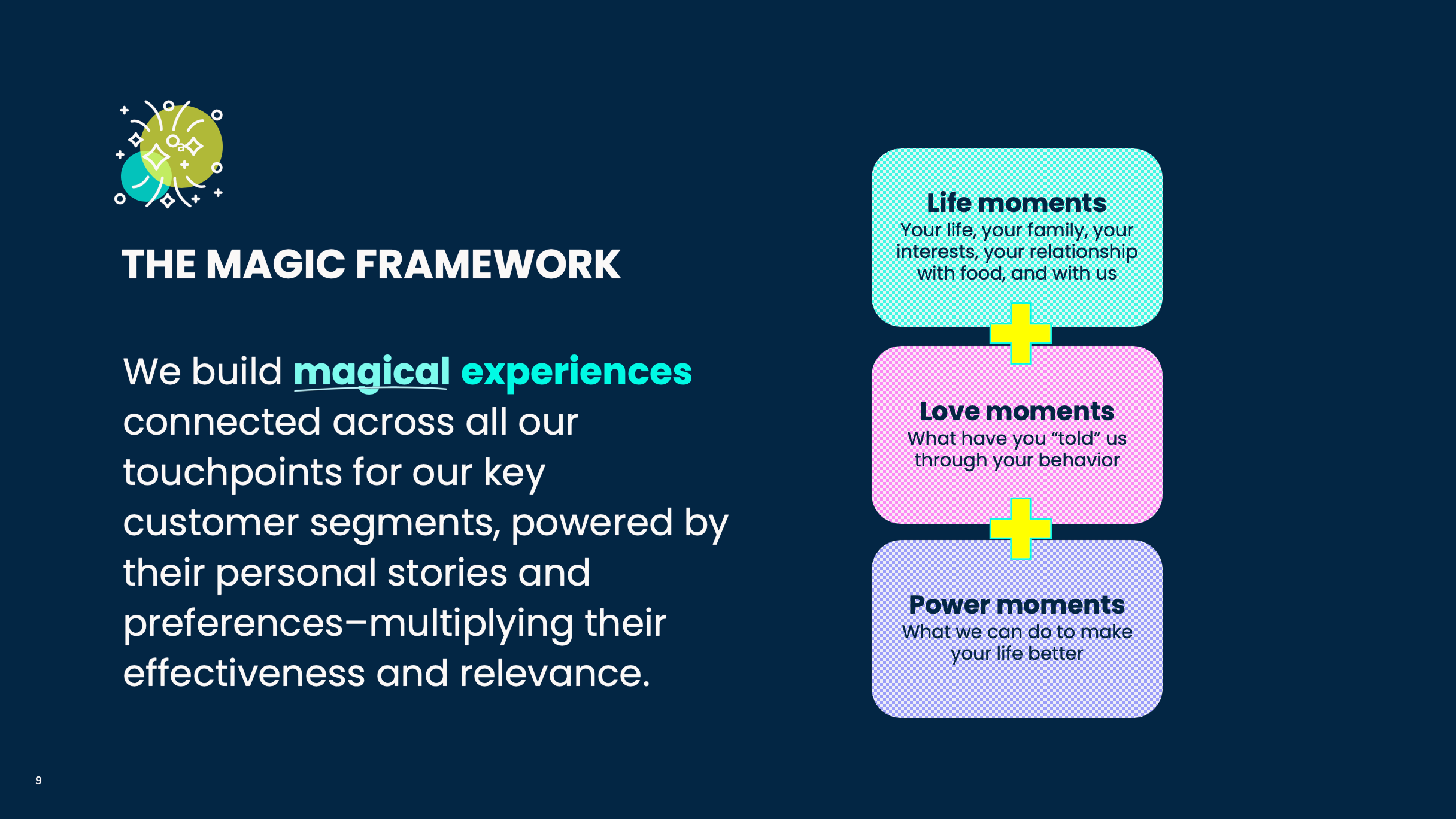
So I built a narrative instead: the Magic Framework. Grounded in our target persona and real customer journey research, it was designed to help people feel the opportunity, not just understand it intellectually. When leadership and partner teams could see themselves in the story, the conversation shifted from "should we do this" to "how do we do this together."
The framework became our common language throughout the year. When prioritization got hard or scope got questioned, we had something to come back to — a shared story that kept us anchored to the customer and to each other.
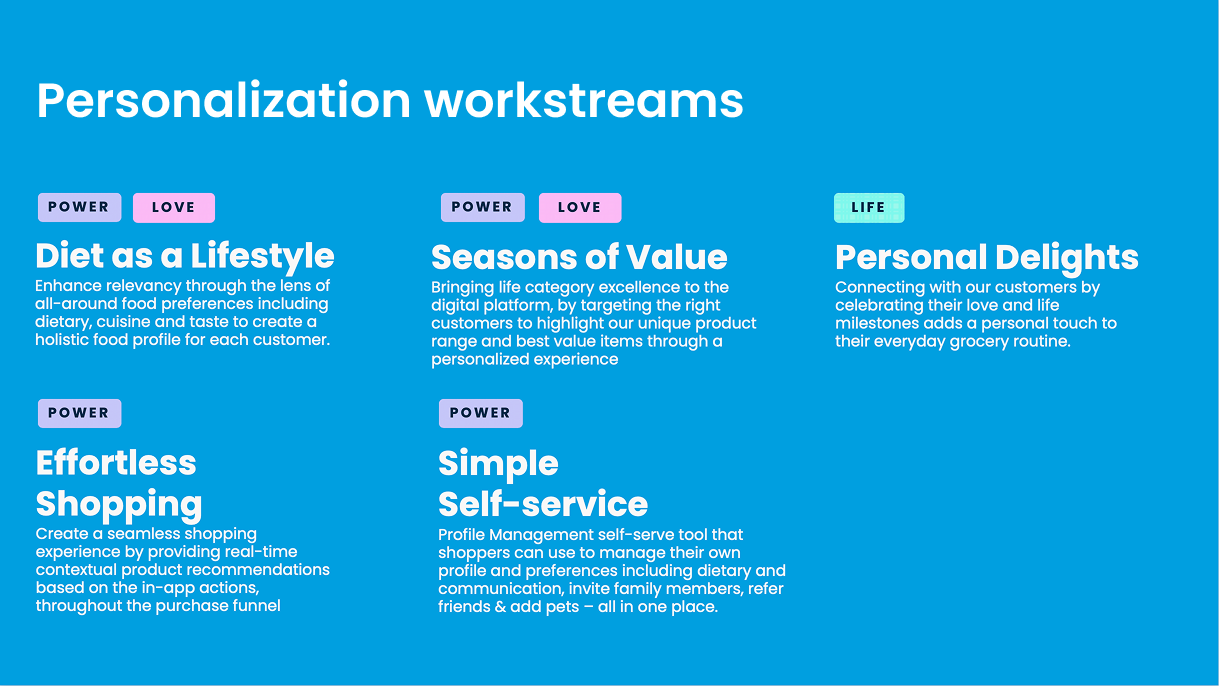
the roadmap to magic
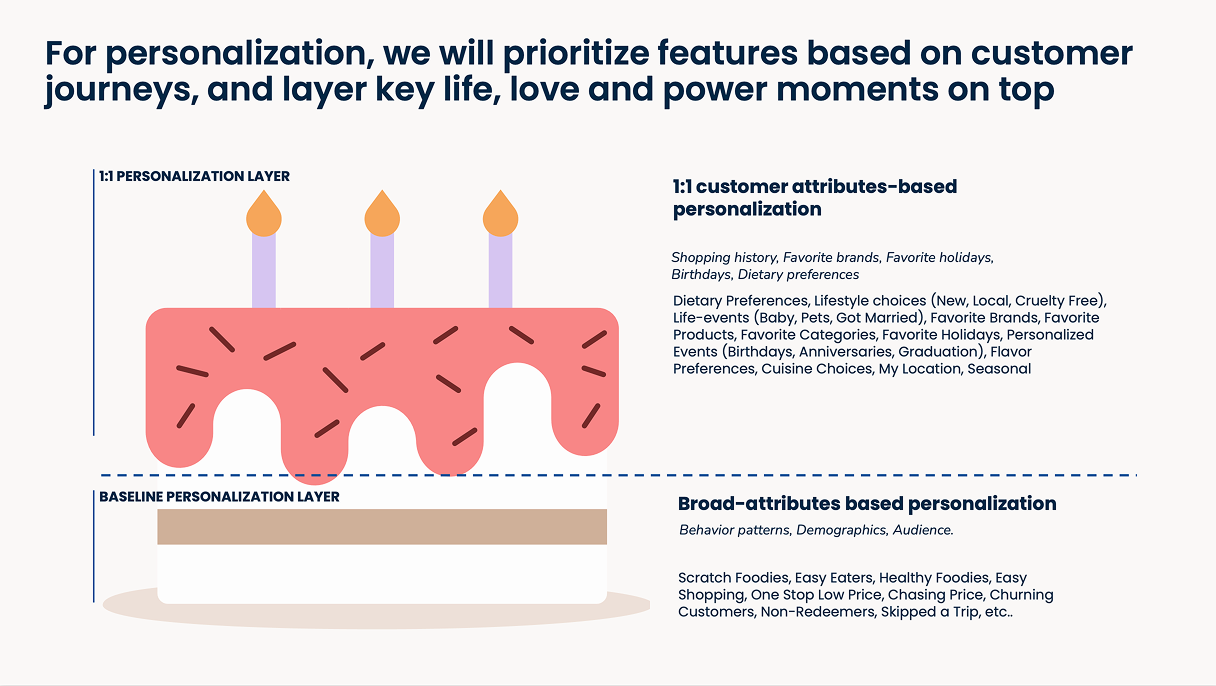
With the vision in place, the next challenge was figuring out where to start. Personalization touches almost every part of the shopping funnel, which makes prioritization uniquely complex — we needed to understand what other teams were already working on, where our goals overlapped, and where there were gaps we could potentially take on together.
So instead of building the roadmap in isolation and socializing it after, I set up ideation workshops with five most relevant cross-functional teams first. It gave us a much more grounded view of the landscape — and it meant the roadmap we landed on wasn't just ours. Other teams were already invested in it because they'd helped shape it.
From experimental to magical
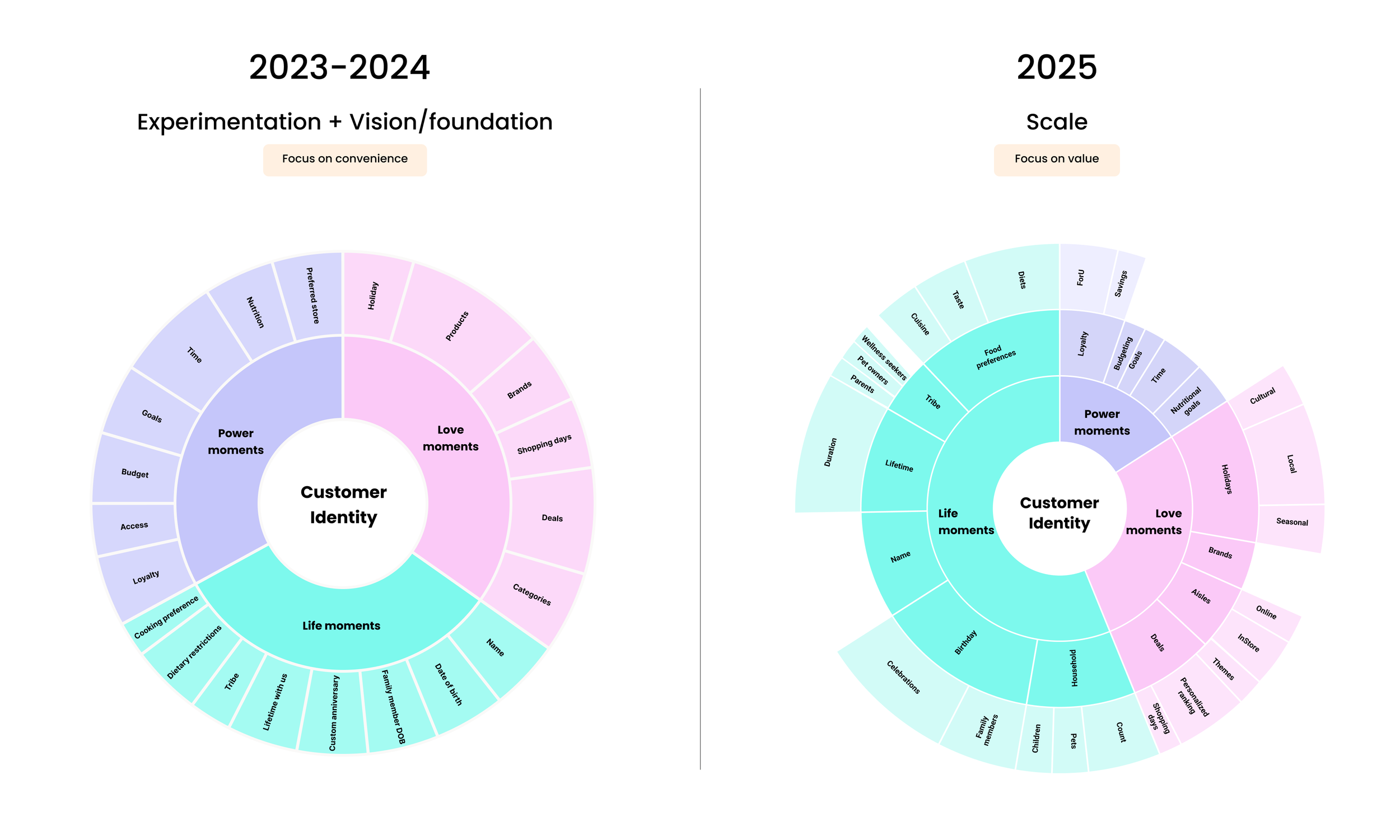
The north star for all of this work was simple: make customers feel seen, heard, and known. But getting there required more than good design — it required proving the concept incrementally and letting the data guide what came next.
High-level metrics to measure success:
Engagement and click-through rate
Add to cart from personalization-enabled features
AOV and increase in revenue
Personalization share of basket
Every new feature was A/B tested against a control before scaling. Features that showed a lift were refined and evolved; ones that didn't taught us something about relevancy and timing. That feedback loop was intentional — when customers engage with personalized features, the model learns, which makes the next recommendation smarter. Engagement wasn't just a metric, it was the mechanism.
From 2023 to 2025, that process took us from a handful of experimental features to 15+ enhancements across the entire shopping funnel — from marketing communications all the way through to purchase. Each one designed to reach the customer at the right moment, with the right suggestion, without feeling intrusive.
What’s next?
In 2025, the goal was to elevate personalization further — launching more Love, Life, and Power experiences that would deepen emotional connections across the shopping journey.
What we learned instead was equally valuable. We had strong ideas and real customer demand, but moving them through the enterprise was harder than anticipated. Funding, infrastructure dependencies, and organizational readiness all became bottlenecks that good design alone couldn't solve.
That reality prompted an important strategic reassessment. Rather than continuing to build features on a foundation that wasn't ready to support them, the team shifted focus toward the underlying data and tech infrastructure — the unglamorous but necessary work that makes everything else possible.
For me, it was a reminder that at this scale, design strategy has to account for the entire system — not just the customer experience, but the organizational and technical conditions that determine what can actually ship.
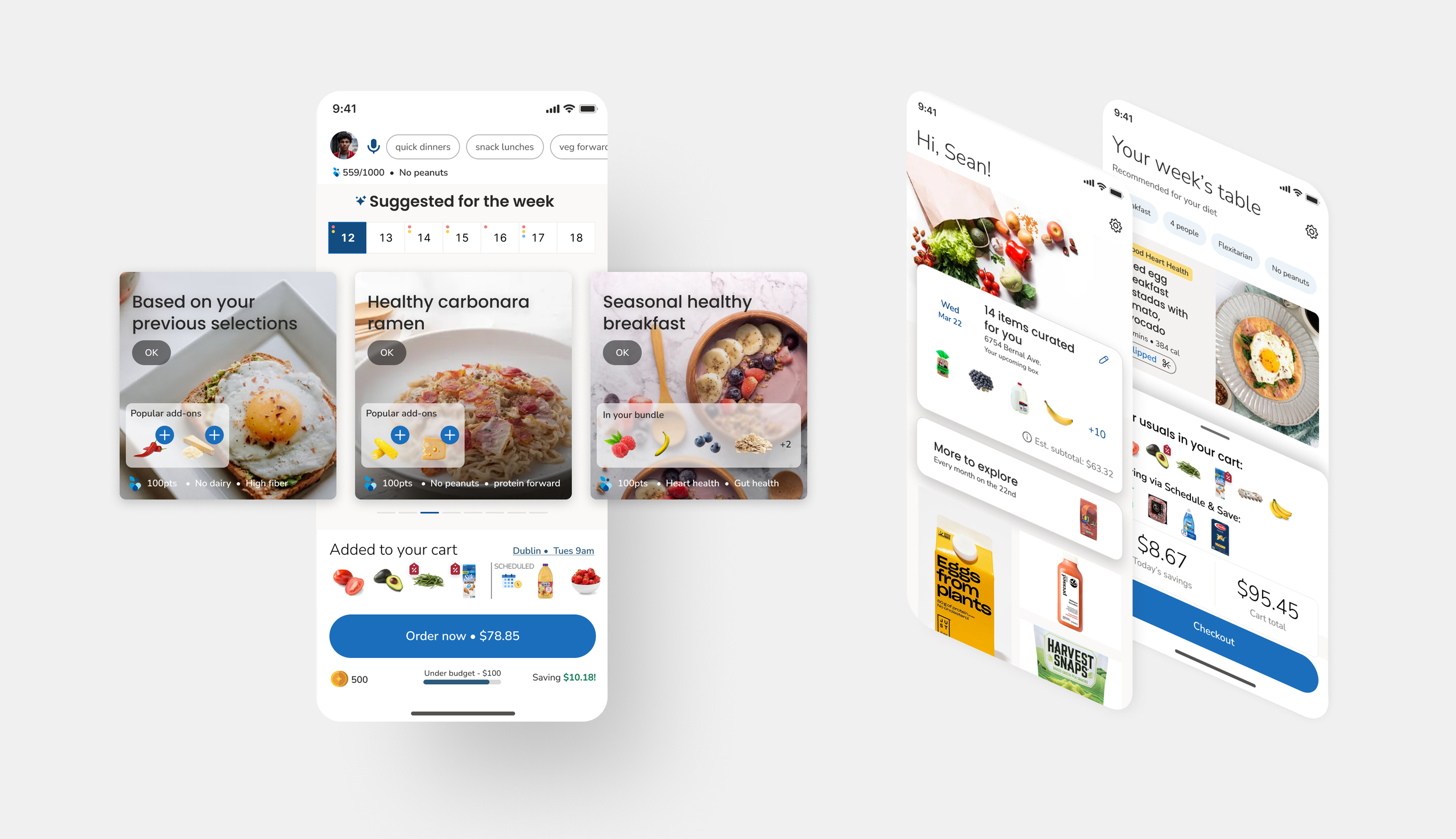
Future personalization concepts and aspirations that the team is using as a North Star to build towards.